Husband Camille Erlanger
Queer Places:
Cimetière de Montmartre, 20 Avenue Rachel, Paris, Île-de-France, 75018 France
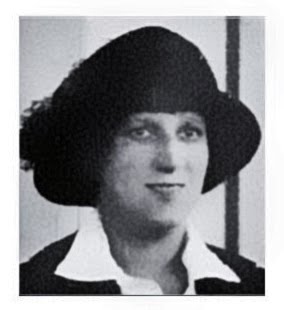 Irène Hillel-Erlanger (born Berthe Rebecca Alice Irène Hillel-Manoach, June 30, 1878 - March 21, 1920) was a French writer, poet, screenwriter, and
pioneering film producer whose intellectual and artistic output played a critical role in the development of the early French avant-garde.
Irène Hillel-Erlanger (born Berthe Rebecca Alice Irène Hillel-Manoach, June 30, 1878 - March 21, 1920) was a French writer, poet, screenwriter, and
pioneering film producer whose intellectual and artistic output played a critical role in the development of the early French avant-garde.
Born Berthe Rebecca Alice Irène Hillel-Manoach on June 30, 1878, in Paris, she grew up within an influential, wealthy Parisian banking family. She
married the composer Camille Erlanger, entering prominent social and artistic circles, and gave birth to
their son, Philippe Erlanger, who would later become a renowned historian and a founder of the Cannes Film
Festival. Following a high-profile divorce resolved in her favor in 1912, she threw herself fully into artistic creation and patronage, financing
progressive literary enterprises—including supporting the early publications of André Gide, André Breton, and
Louis Aragon—and establishing an influential salon frequented by leading figures of Dadaism and early
Surrealism.
Initially publishing poetry under the male pseudonym Claude Lorrey, Hillel-Erlanger eventually abandoned her pen name to write under her own identity
as she transitioned into cinema and prose. In 1915, her career took a decisive turn when she collaborated with pioneering director
Germaine Dulac. Together, they co-founded the independent production company Les Films DH (later known as H-D
Films) in 1916. Hillel-Erlanger served as the primary business administrator, financier, and screenwriter for the company, scripting narrative films
directed by Dulac, such as La Belle Dame sans Merci (1920). In 1919, she published her most famous literary work, Voyages en Kaléidoscope (Kaleidoscope
Voyages), a Dadaist, proto-surrealist novel offering a satirical and prophetic vision of cinema and modern media. Her life was cut short when she died
suddenly in Paris on March 21, 1920, at the age of 41, reportedly due to typhoid fever.
Hillel-Erlanger’s legacy is deeply tied to her LGBTQ connections through her romantic and artistic relationship with Germaine Dulac. Following Dulac’s
separation from dancer Stasia Napierkowska in 1915, Dulac and Hillel-Erlanger became romantically
involved, forming a close partnership that combined personal intimacy with creative collaboration. Their joint establishment of Les Films DH created a
crucial early platform for queer and feminist artistic agency in the French film industry, allowing them to subvert traditional narrative conventions and
explore female agency free from male studio oversight. Through her personal partnership with Dulac, her patronage of avant-garde queer literary networks,
and her subversion of gender roles in her early writing under a male pseudonym, Hillel-Erlanger remains an important figure in early 20th-century queer
film and literary history.
References:
- Hillel-Erlanger, Irène. Voyages en kaléidoscope. Paris: Georges Crès & Cie, 1919.
- Hillel-Erlanger, Irène (writing as Claude Lorrey). Early poetic contributions in various French literary journals and small-press pamphlets during the 1900s–1910s.
- Hillel-Erlanger, Irène, and Germaine Dulac. Screenplays and production archives for Les Films DH (e.g., La Belle Dame sans Merci, 1920).
- Williams, Tami. Germaine Dulac: A Cinema of Sensations. University of Illinois Press, 2014.
- Erlanger, Philippe. La Chasse à l'homme. Paris: Table Ronde, 1968.
- Flitterman-Lewis, Sandy. To Desire Differently: Feminism and the French Cinema. Columbia University Press, 1996.
- Aragon, Louis. "Voyages en kaléidoscope." Littérature, no. 9, November 1919.
- Biro, Adam, and René Passeron. Dictionnaire général du surréalisme et de ses environs. Presses Universitaires de France, 1982.
Support this project
This website is a passion project researched, developed, and funded entirely by me. If you find the content valuable and would like to help support the ongoing research and hosting costs, any contribution is deeply appreciated.
Thank you for keeping this independent resource alive!
My books on Amazon: Elisa Rolle's books
BACK TO HOME PAGE